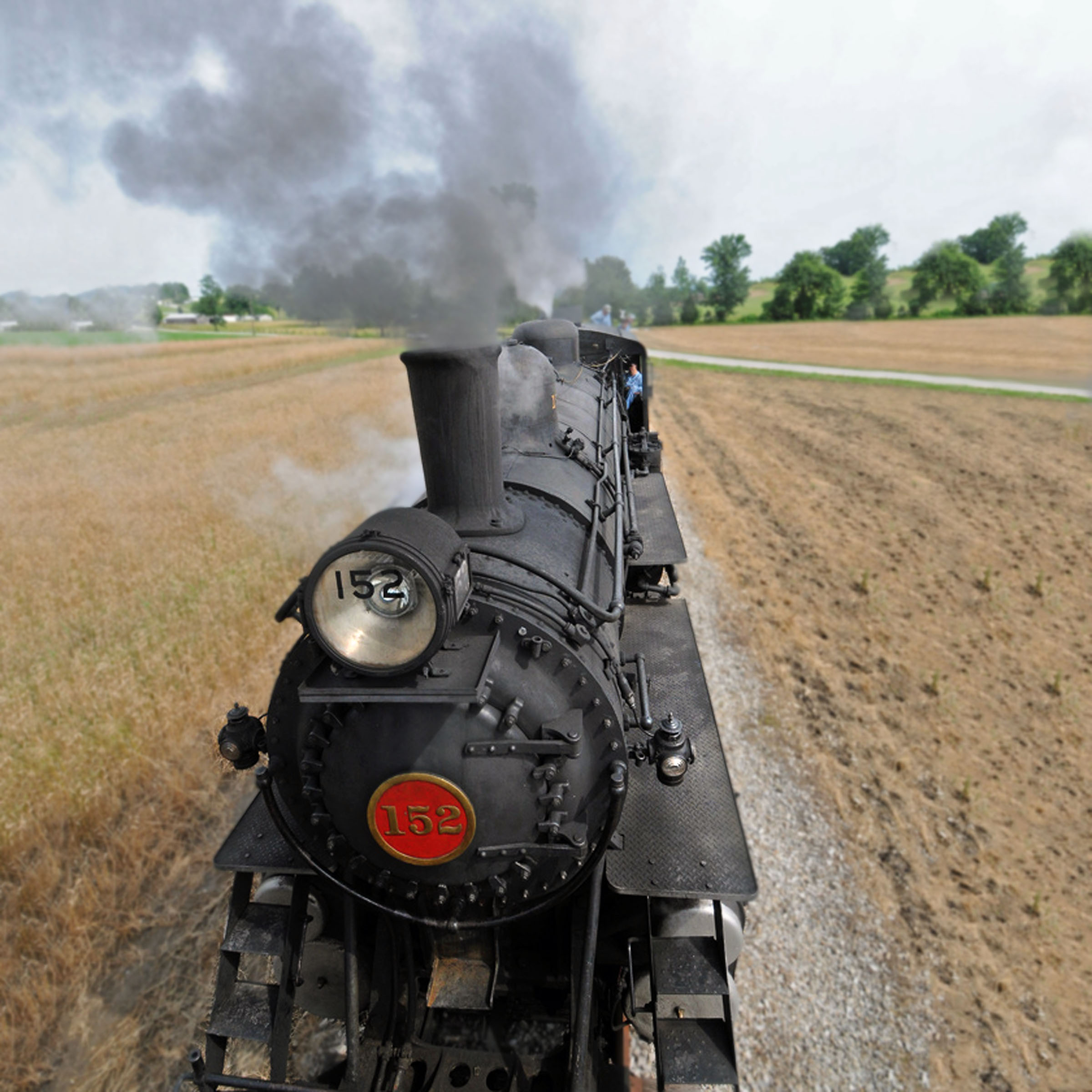
The Kentucky Railway Museum (KRM), owner and operator of former Louisville & Nashville Railway steam locomotive number 152 (L&N 152), has engaged the Coalition for Sustainable Rail (CSR) to serve as consulting engineers in returning the 110-year-old locomotive to operation.
Locomotive 152, a 4-6-2 Pacific, was the first artifact acquired by KRM upon its founding in 1954. The engine was rebuilt by volunteers from 1972 to 1985, and a series of excursions on Seaboard System and Norfolk Southern followed in the late 1980's. Since 1990, the engine has run passenger excursions on KRM's 17 miles of track, and had extensive firebox work done from 1996-1998. The locomotive was again taken out of service in 2011 just prior to its flue time expiring. KRM is undertaking this detailed study of the locomotive to determine the scope of work required to place the engine back into service.
“Our work with KRM is a great opportunity to help educate a passionate museum volunteer force and to study in great detail the effects of nearly a century of use on locomotive boiler systems,” explained CSR President Davidson Ward. “Of particular importance is the opportunity to help newer volunteers understand acceptable standard repair practices which meet federal requirements and safety standards. This will greatly contribute to the longevity of the locomotive and the KRM steam program.”
“In making our selection of an Engineering Consultant, the Coalition for Sustainable Rail stood out because of its Team Members’ varied practical expertise. ”
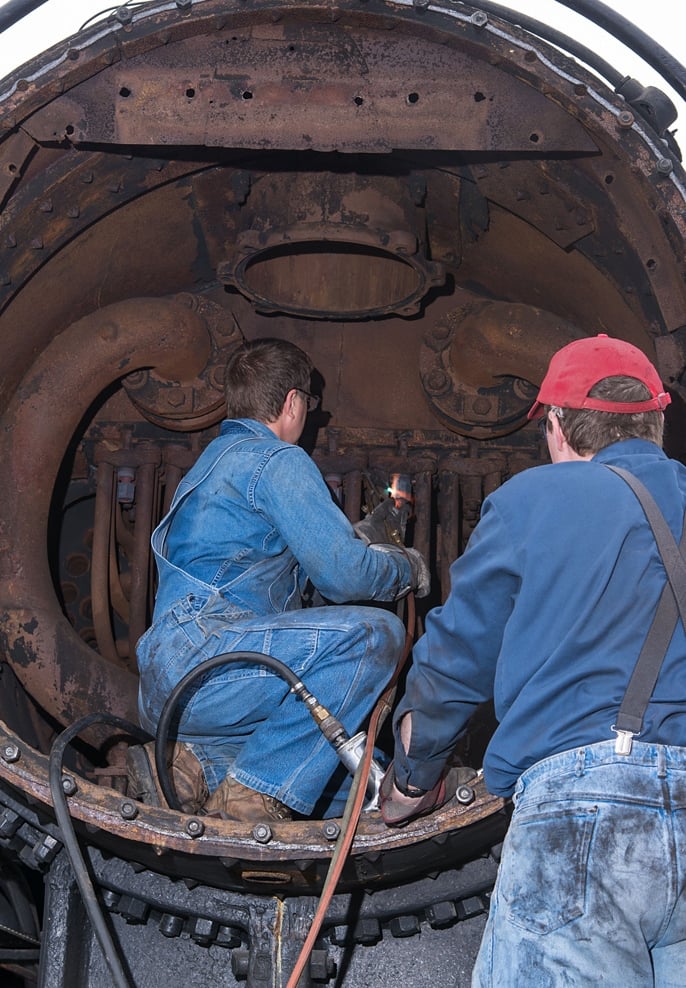
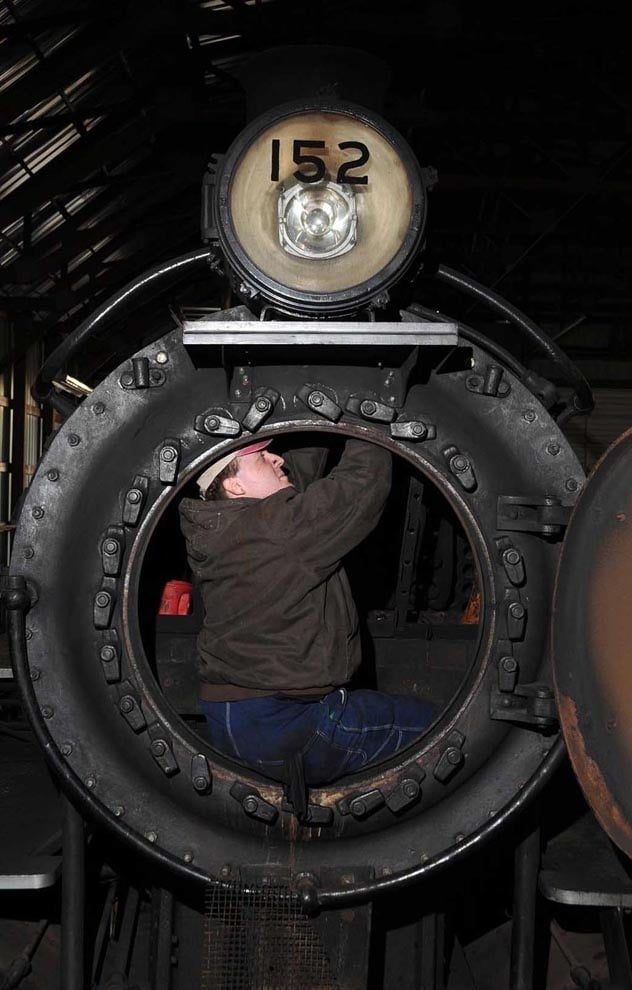
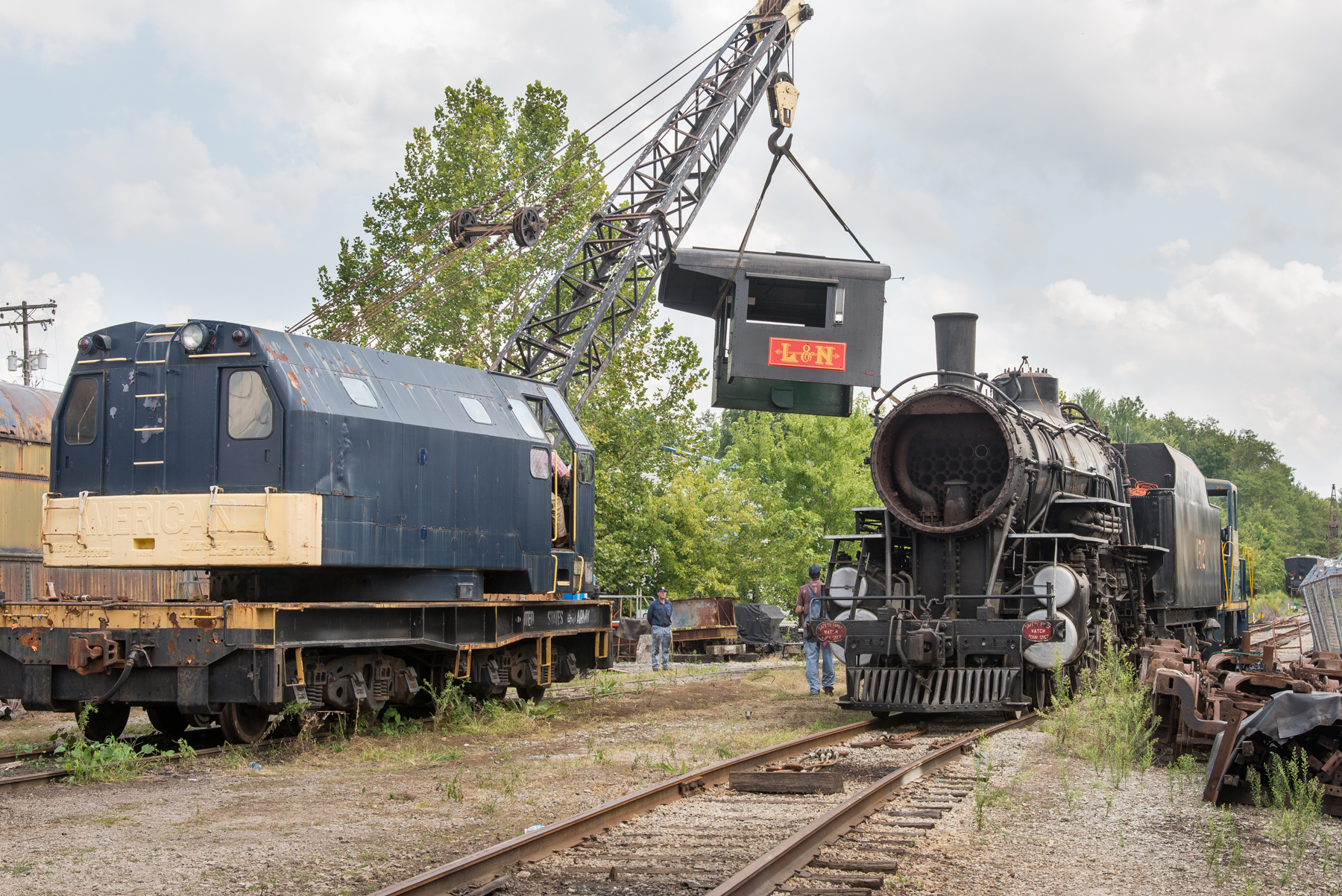
The CSR Engineering Team will work hand-in-hand with KRM volunteers and staff in completing the inspection. Already, the 152 Restoration Committee and its volunteers have begun preparing the locomotive and boiler for inspection, including removal of boiler tubes and flues, boiler jacketing, firebox components and more. Once the pressure vessel and locomotive are cleaned and ready for inspection, CSR will send a crew to inspect the boiler ultrasonically and perform an inspection of the overall locomotive and tender to determine what work needs to be done to return the locomotive to service.
“In making our selection of an Engineering Consultant, the Coalition for Sustainable Rail stood out because of its Team Members’ varied practical expertise, including experience on successful programs such as Santa Fe 3751, and Southern 630 and 4501, and their willingness to help us meet our goals for the project,” explained KRM 152 Project Manager Rob Minton. “We wanted to partner with a group of steam technicians that were both experienced with hands-on work and detailed engineering analysis to assist our team of volunteers.”
The KRM Steam Crew consists of about 15 volunteers led by Mark Johnson in the role of Master Mechanic and draws heavily on the experience of Joe Bratcher, Lewis Hicks, and Carl Cruger of the original restoration team. The CSR Engineering Team undertaking this work include its Senior Mechanical Engineer Wolf Fengler, MSME, Director of Project Management Rob Mangels, President Davidson Ward, and Technical Advisor Shane Meador.
“Keeping 110-year-old locomotives under steam safely and efficiently is of extreme importance to the continued operation of historic rail equipment in the U.S.,” said CSR’s Wolf Fengler. “As we have done with our work on the Harz Narrow Gauge Railways in Germany, our Engineering Team is prepared to undertake this work with the highest regard for safety, technological soundness, and, above all, historical integrity.”

TECHNICAL SPECIFICATIONS OF L&N 152

This builders photograph of sister locomotive 151 shows how the engine appeared 110 years ago.
The table below outlines the detailed technical specifications of L&N 152. From the KRM website:
L&N #152 is a 4-6-2 Pacific type locomotive built in 1905 by Rogers Locomotive Works. #152 is the official steam locomotive of the Commonwealth of Kentucky as designated by an act of the Kentucky Legislature. It is also listed on the national registry of Historic Places by the U.S. Department of the Interior.
| CATEGORY | L&N 152 |
|---|---|
| General Classification | 4-6-2 |
| Service | Passenger |
| Fuel (Current) | Coal |
| Builder | Rogers |
| Year Built | 1905 |
| Tractive Force, lbs. | 28,991 |
| Weight in Working Order, lbs. | 187,800 |
| Length, Wheelbase, locomotive & tender, ft.-in. | 61-7 |
| Boiler Pressure, lbs. (Designed) | 200 |
| Firebox Grate Area, Sq. ft. | 45 |
| Engine (Bore x Stroke), in. | 20 x 28 |
| Driving-wheel Tread Diameter, in. | 69 |
ABOUT THE KENTUCKY RAILWAY MUSEUM
The Kentucky Railway Museum is a 501 (C) (3) Non-Profit Organization chartered in the Commonwealth of Kentucky for the purpose of educating the public regarding the history and heritage of Kentucky's railroads and the people who built them. This is accomplished through the acquisition, restoration, preservation, display, and operation of historic railroad equipment. The museum owns 17 miles of track (formerly part of the L&N Lebanon Branch), and operates excursion trains between New Haven and Boston, KY.
Website: www.kyrail.org
Office phone: 800-272-0152
Facebook: The Kentucky Railway Museum and Crew 152


