Want greater detail? We've got it!

CSR is pleased to announce its new "White Paper Program." Working with the University of Minnesota (U of M), the Porta Family Foundation Archives, and other not-for-profit rail and biomass research organizations, CSR's White Paper Program aims to bring scholarly works pertinent to biofuel, modern steam locomotive and transportation research into the public discourse.

As its first White Paper, CSR chose "The Case for a Better American Steam Locomotive," written by foremost modern steam mechanical engineer L.D. Porta in the mid-1970's in response to the 1973 Arab Oil Embargo and two articles published inTrains Magazine during the 1960's .  Originally intended to be published in Trains, this paper deals with aspects U.S. and European locomotive design and the need for alternatively-fueled motive power (coal was popular at that time).

Of specific interest today, at a time whenUnion Pacific is discussing the possibility of rebuilding one of their "Big Boy" locomotives, this article discusses how, through careful thermodynamic design, a Big Boy could produce in excess of 10,000 drawbar horsepower.  Not simply a "pie in the sky" argument, similar engineering principles were applied to the South African Railways 4-8-4 No. 3450 a few years after this article was written, resulting in 40% higher drawbar horsepower, a 30% reduction in coal consumption and a 30% reduction in water demand, not to mention decreased maintenance cost.

So, enjoy this paper and look forward to other technical documents CSR will post on its website over the coming months.  And, if you have yet to join our email list or sign up as a supporter, please consider doing so in the closing days of 2012!  As with other not-for-profits, every bit of support helps CSR meet its goals and continue to provide innovative research and compelling papers.

CSR Announces New Technical Advisors

CSR is pleased to announce that Alejandro Dante Porta, the youngest son of Ing. Livio Dante Porta, and Wolfgang Fengler have been appointed to its Advisory Committee.  Their inclusion and in-depth support of CSR will help further the organization's technical goals.

Alejandro Porta traveled the world with his father, Ing. L.D. Porta, who did more to advance the application of modern steam thermodynamics to the steam locomotive than perhaps any other engineering practitioner in the Twentieth Century.  Working closely with friend and L.D. Porta protege Ing. Shaun T. McMahon, CSR's Director of Engineering, Alejandro is excited to develop a close cooperation between CSR and the Porta Family Foundation Archives, a collection of technical papers and research created by Porta over his 60 year career.  An example of the collaboration between the Porta Family Foundation and CSR is evidenced in the publishing of never-before-digitized "Case of the Better American Steam Locomotive," written by his father at the height of the Arab Oil Embargo.  The collaboration between the two entities will also facilitate a preservation and promulgation of research that has yet-to-be released, allowing CSR engineers access to real world test results from the Red Devil, Rio Turbio Railway, FCAF [above right] and other railroads that have employed steam locomotive modernizations successfully.

Wolfgang Fengler is no stranger to the world of large Santa Fe steam locomotives and modern steam locomotive mechanical engineering.  He is currently assisting, on one level or another, the overhaul of A.T.&S.F. locomotives 5000 and 2926, and has served on the board of the San Bernardino Railroad Historical Society, owners of A.T.&S.F. 3751. Having corresponded extensively with Ing. L.D. Porta and Ing. D. Wardale, as well as having applied and tested modifications to both scale model steam locomotives and 3751 (e.g. high tech, low resistance coatings on one main crosshead pin), Wolf is excited to be a part of the Coalition.  In specific, his expertise in computer modeling and thermodynamics will be of great help as the engineering phase of Project 130 begins in earnest in 2013.

Torrefied Biomass on TV

In the NBC news clip below, viewers are introduced to the future fuel behind CSR Project 130: torrefied biomass. Tim Hagen, a chemical engineer with the National Resource Research Institute (NRRI), has been a key partner of CSR in developing the clean fuel to power locomotive 3463.

NRRI and CSR are confident that torrefied biomass will play a significant role outside passenger rail as well. As described in the clip, the fuel can be densified and processed to meet various needs, including pellets for use in home heaters or briquettes for use in modern steam locomotives. NRRI and CSR are actively pursuing options to begin production of torrefied biomass on a pre-commercial scale and are well on the way to having a viable, commercial fuel product.

CSR Featured in Wired Magzine

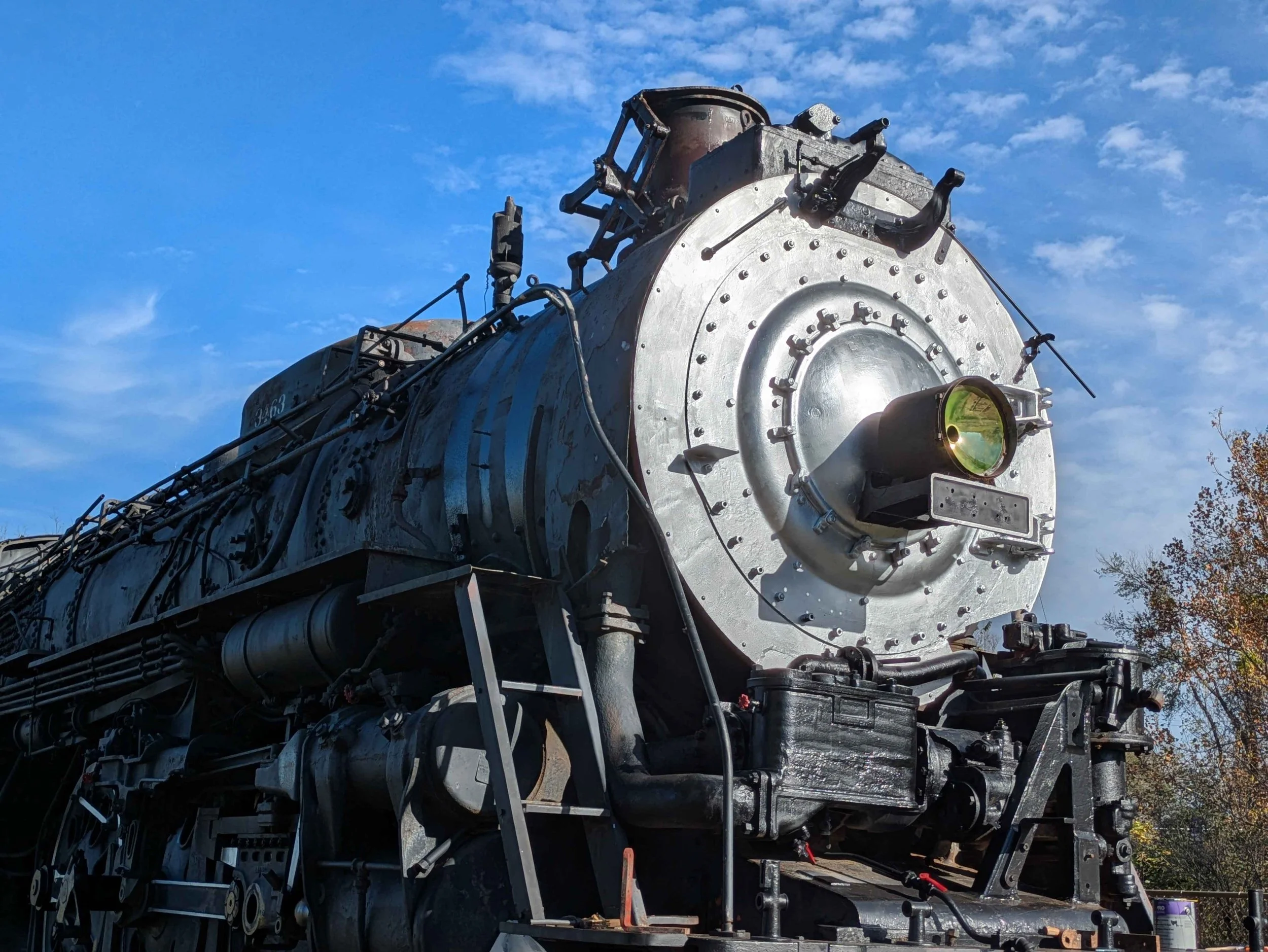
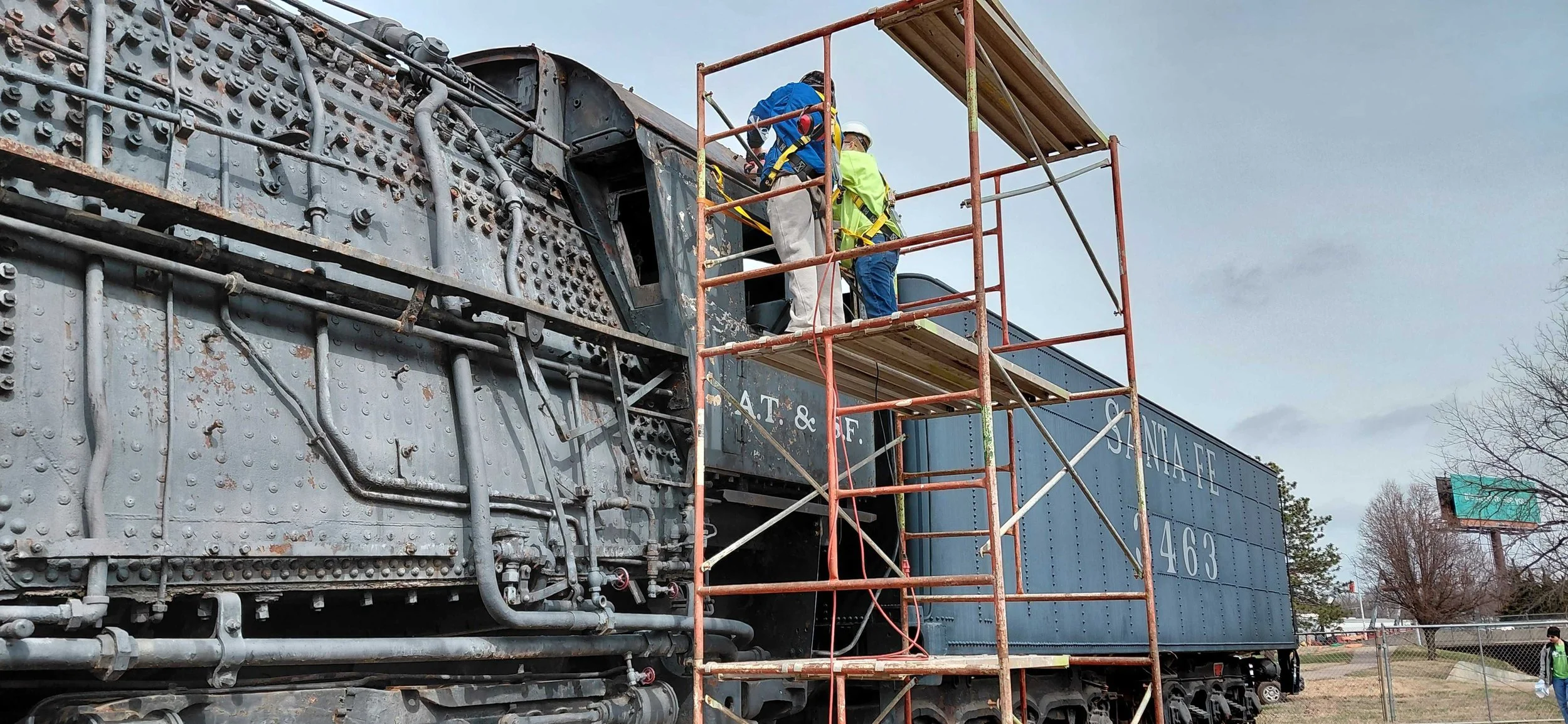
"BACK ON TRACK" - CSR Project 130 is featured in this month's (October, 2012) WiredMagazine.  Written by author and conceptual artist Jonathon Keats, the piece takes a modern, "geeky" approach to the project. This article comes at a time when CSR continues to build momentum, developing additional collaborative partners and planning the future move of 3463 out of its current location.

The article, complete with a before/after shot of the cosmetic stabilization of 3463, outlines how CSR Project 130 will progress, offering a bit of themed support at the end... 

Be sure to pick up your copy of the magazine today to read all about it! 

CSR Project 130 Chugs Ahead

Project 130 is picking up steam! The plan announced last month to turn a 1937 locomotive into proof-of-concept for a promising carbon-neutral energy source has been nominated for the 2012 Katerva Award, considered the "Nobel Prize" of sustainability.

The project is the brainchild of the Coalition for Sustainable Rail, a collaboration of Sustainable Rail International and the University of Minnesota's Institute on the Environment. Its goal is to renovate the aging engine and run it at 130 mph - a world speed record for a steam locomotive - using torrefied biomass, a carbon-neutral fuel developed by the University's Natural Resources Research Institute. CSR president Davidson Ward says efforts to create the world's first carbon-neutral higher-speed steam locomotive aim to draw attention to the promise of torrefied biomass not only as a sustainable transportation fuel, but also as a potential source of carbon-neutral, renewable combined heat and power in developing countries.

The Katerva Award recognizes and rewards "paradigm-busting ideas" that create change toward a more sustainable world. Last year's grand prize went to Sanergy, an initiative working to build sustainable sanitation centers in Kenya. Project 130 is among some 300+ projects worldwide nominated for this year's award. After selection by an international team of judges, category winners and a grand prize winner will be announced in December.

Text courtesy of Mary Hoff and the "Eye on Earth" blog at the U of M's Institute on the Environment.