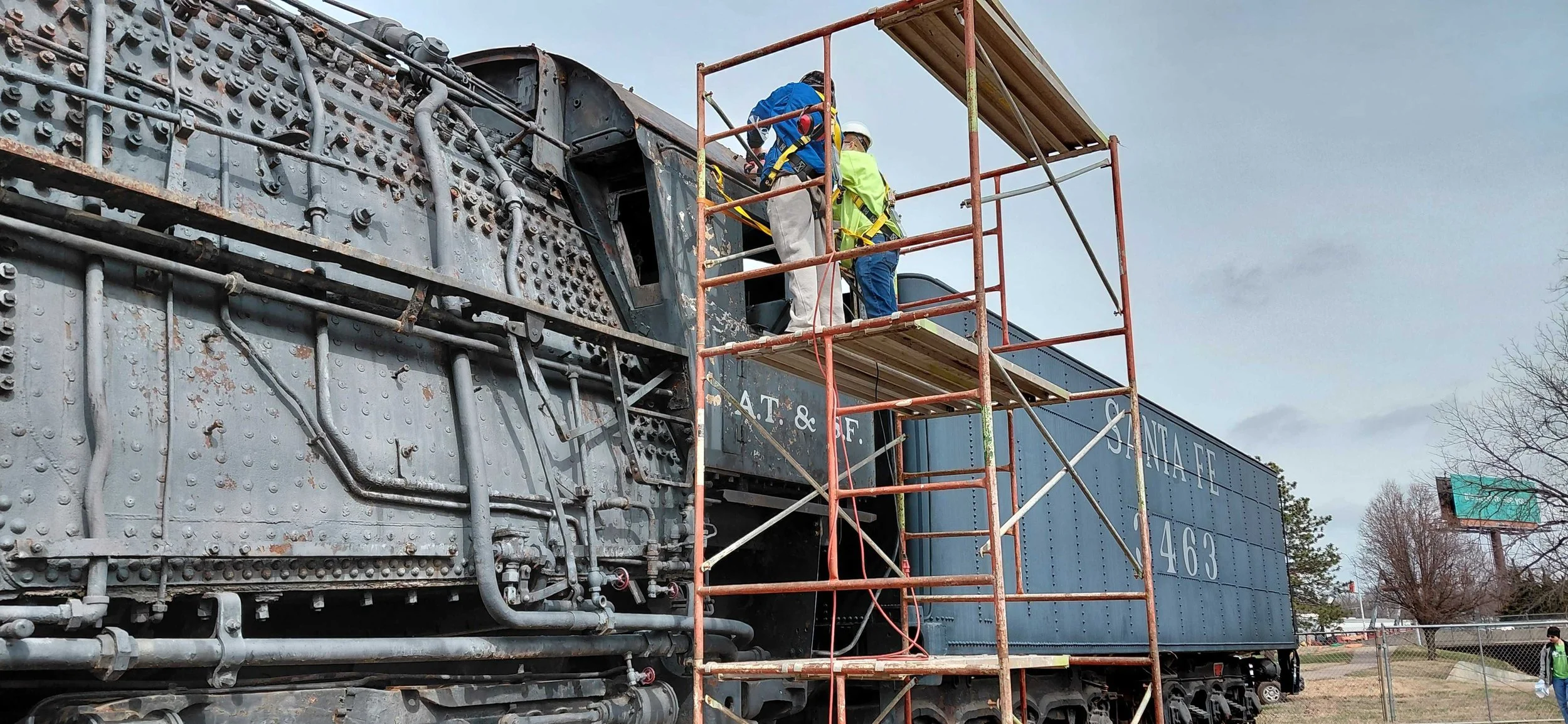
Everett Railroad Fundraising Gaining Steam!

CSR has made significant headway towards its goal of raising $20,000 in support of biofuel testing at the Everett Railroad. We closed out 2017 with raising just under $15,000 towards that goal, and work is still underway preparing for those tests later this year.

We recently released this video on Facebook supporting our fundraising efforts. We want YOU to ride along with us on these upcoming tests. Donors to CSR are invited to ride along! Details are found on our Everett Railroad page, or you may give online here.

Biofuel Tests at Milwaukee Zoo Train a Success, CSR and NRRI Look Ahead to Standard Gauge Trials

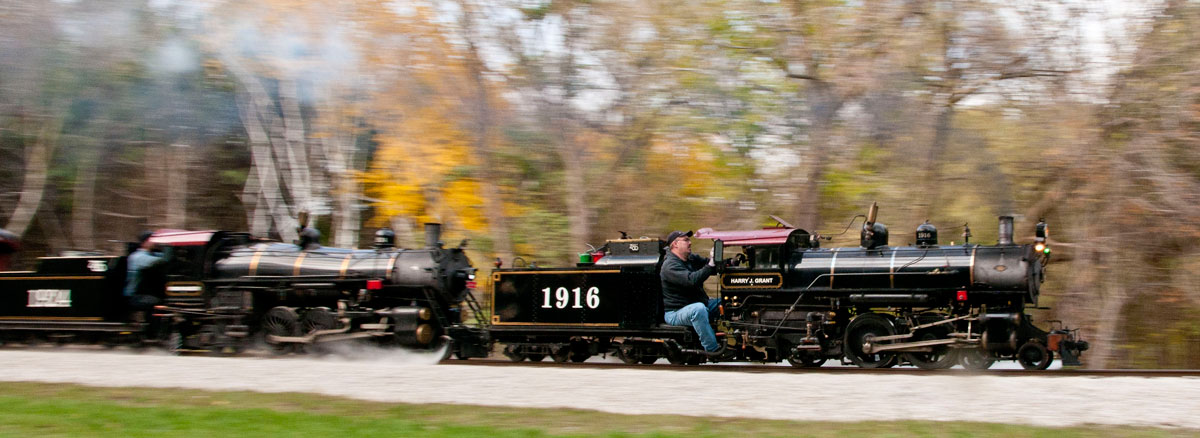
Milwaukee County Zoo train on a trial - the first locomotive is burning 100% torrefied biomass, and the trailing locomotive is burning a 50/50 blend of torrefied biomass and coal.

Milwaukee County Zoo train on a trial - the first locomotive is burning 100% torrefied biomass, and the trailing locomotive is burning a 50/50 blend of torrefied biomass and coal.

Two steam locomotives at the Milwaukee County Zoo were fueled with a renewable wood-based solid fuel last week to reduce fossil coal emissions, and the tests were a success.

The Coalition for Sustainable Rail (CSR) and the Natural Resources Research Institute (NRRI) completed a final series of three biofuel trials following more than a year and a half of development of the fuel at NRRI’s Renewable Energy Lab in Coleraine, Minn. Thanks to the generosity of the Milwaukee County Zoo, its small 15-inch gauge railroad has served as a demonstration platform for CSR and NRRI to see how a wood-based torrefied biomass fuel product burns in locomotive-style boilers. Tests in June and October 2016 revealed that the biofuel could make sufficient steam, but improper pelletizing methods resulted in spark emissions from the locomotive.

“Following the first trials, our researchers set about devising a better method to densify the material, including acquiring an industrial scale densification machine that we installed at our lab in Coleraine,” explained NRRI Associate Director, and CSR Board Member, Don Fosnacht, Ph.D. “Combined with a food-grade binding agent, we were able to make dense, pill-shaped pellets for use with these Zoo test trials that burned exactly like coal.”

No. 1924 hauls the test train up the steepest grade on the Zoo railroad burning 100% torrefied biomass.

No. 1924 hauls the test train up the steepest grade on the Zoo railroad burning 100% torrefied biomass.

NRRI is currently researching the opportunities in “torrefied biomass,” a wood-based biofuel that is made in a kiln not unlike a coffee roaster. After being “roasted,” the wood is transformed into a fuel that burns and reacts much like coal,  with virtually no heavy metal pollutants and reduced carbon emissions. NRRI provided three blends of torrefied biomass to the Zoo for testing: 1) a blend of 99 percent torrefied biomass and 1 percent binder agent; 2) a blend of 49.5 percent torrefied biomass, 49.5 percent Powder River Basin coal, and 1 percent binder; and 3) a 100 percent torrefied biomass pellet with no binder. Each of the fuels was tested in the Zoo train locomotives, and two were found to be ideal stand-in fuels for fossil coal.

Pre-blended torrefied biomass / Powder River Basin fuel pellets ready to load in the tender of No. 1924.

Pre-blended torrefied biomass / Powder River Basin fuel pellets ready to load in the tender of No. 1924.

“The torrefied biomass with binder, and the 50/50 blend of coal and biofuel, worked quite well in both locomotives,” said CSR President Davidson Ward. “Both fuels burned nearly identical to coal, including building a decent coal bed on the grates and maintaining pressure under a wide variety of operational circumstances, while being nearly smoke and odor free.”

Initial temperature data also indicate that the biofuel heating value is equal to coal. The maximum firebox temperatures recorded during the biofuel trials were in excess of 2,100 degrees Fahrenheit (1149 Degrees Celcius).

“I am quite impressed with what I saw from this round of biofuel testing, and I look forward to burning it in our steam locomotive,” said Zach Hall, Steam Operations manager at the Everett Railroad, who was on site to participate in the tests. “From my observations, both the biomass with binder and 50/50 blend of fuel will do just fine to make steam and minimize smoke, both of which are good things in my book.”

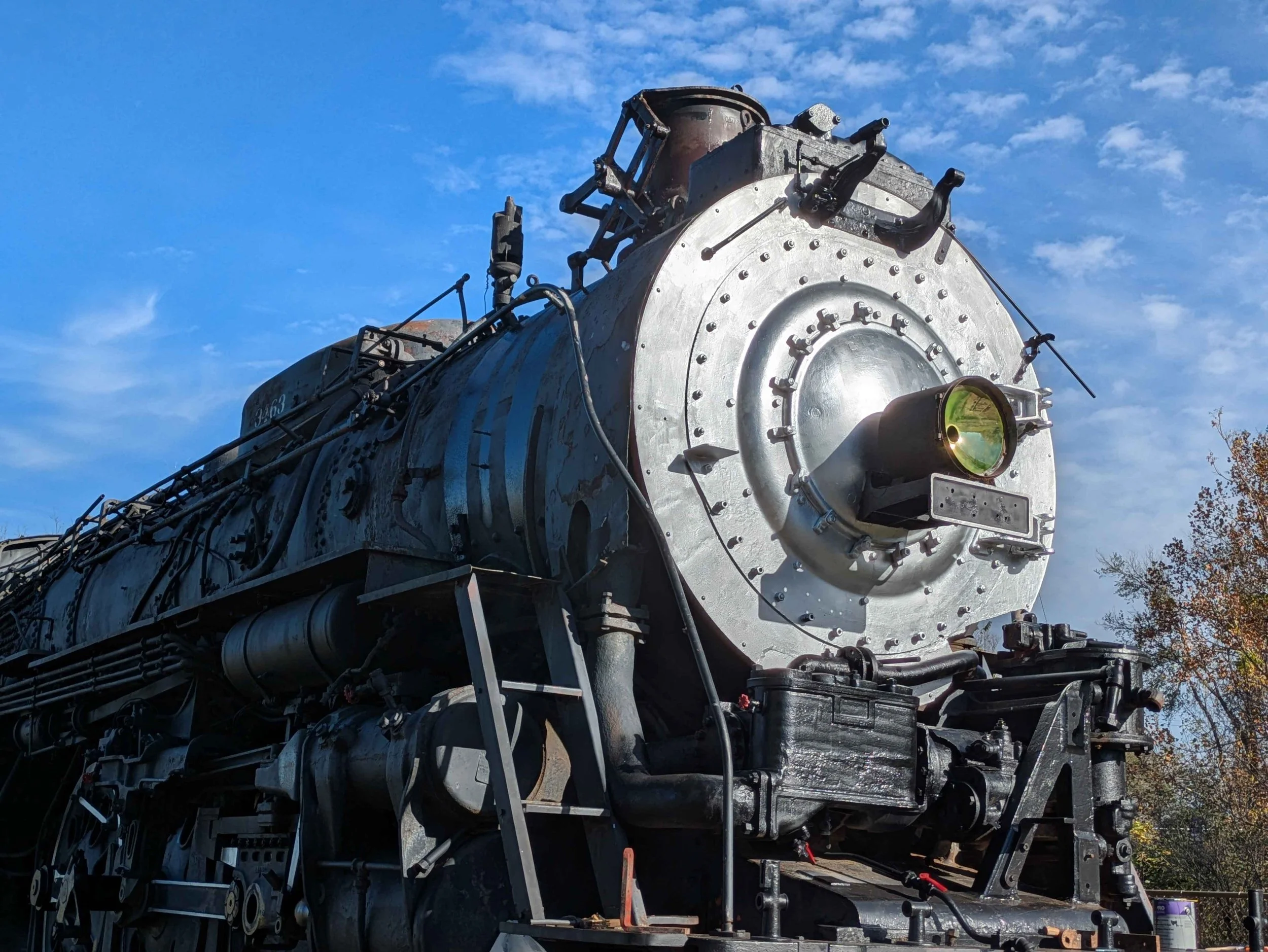
CSR and NRRI are ramping up for the next round of tests: manufacturing 10 tons of fuel for use by Everett Railroad steam locomotive No. 11 early next year. In support of these tests, CSR is undergoing a matching grant fundraising process, whereby donations to the non-profit made between now and December 15 will be matched dollar-for-dollar (up to $10,000).  
Zoo Tests: a sneak peek

2017_11_06_0585web.jpg

The Coalition for Sustainable Rail, in conjunction with staff from the Natural Resources Research Institute, completed a third round of torrefied biomass fuel tests with the steam locomotives at the Milwaukee County Zoo this past Monday.  CSR will be providing more details about the findings of that research next week but, in short, it was a success!

Until then, check out the following video of Zoo train 4-6-2 No. 1924 hauling our test train. The locomotive is burning torrefied biomass fuel.

The deep "humming" noise is the locomotive "drumming." Similar to pulse jet engines, the fuel is generating so much combustable matter that the firebox is consuming more air than it can bring in at one time. As air comes through the firebed, it flash ignites, causing a small "boom." Multiply this by hundreds of bursts of air coming through the firebed at once, you get drumming. This is alleviated through better ash pan design, installing overfire tubes (like most late-model steam engines), or cracking the door a bit. Notice that the noise stops when the engineer opens the door to shovel each scoop of fuel into the firebox.

New White Paper - Preserving Solid Fuel Firing in a Post-Coal World

This white paper addresses how economic and environmental concerns are shifting global energy markets away from coal towards natural gas and other technologies, making preservation of the skills associated with solid fuel firing increasingly difficult for heritage operators. The Coalition for Sustainable Rail (CSR), in association with the Natural Resources Research Institute at the University of Minnesota - Duluth (NRRI), is working to stay ahead of this eventuality by developing a direct coal replacement employing sustainable biomass.

Preliminary results are detailed in the paper, outlining steps being taken by CSR to perform instrumented testing and refinement of this material to-date. The project is specifically designed to reduce risk associated with development of the fuel by first conducting tests in quarter scale locomotives and then systematically moving toward larger, and larger equipment. 


UPDATE: A newer version of this paper was re-uploaded in November 2017 that includes minor corrections to the text and content. 

CSR and NRRI Forge Ahead with Biofuel Research, Matching Grant Announced

The Coalition for Sustainable Rail and its research collaborators at the Natural Resources Research Institute are forging ahead with their biofuel initiatives, including pursuit of a wood-based substitute for use in coal-fired steam locomotives. Following a retooling of its large torrefaction reactor, NRRI recently hosted an event announcing the commissioning of the reactor.

NRRI initially began commissioning the reactor in Fall 2016, providing CSR some of the very first torrefied biomass made in the machine. Following those initial trials, the torrefaction reactor was taken out of service for modification and additional testing. One year later, the reactor and a new densification machine are again ready to generate fuels for testing.

The densified fuel made for CSR that was used in the second Zoo trials last fall were quite friable. NRRI has since devised a more advanced way to densify the material.

The densified fuel made for CSR that was used in the second Zoo trials last fall were quite friable. NRRI has since devised a more advanced way to densify the material.

The new densification unit creates very uniform, half-pill-shaped pellets that burn very much like coal. When burning, this fuel reacts much the same way as coal.

The new densification unit creates very uniform, half-pill-shaped pellets that burn very much like coal. When burning, this fuel reacts much the same way as coal.

A key portion of the retooling has been the installation of a more advanced densification unit that is able to create pellets with a uniform, and highly compressed profile. This will allow the fuel to burn more like coal and minimize spark emissions, especially when used in a railroad environment.

To test this theory, CSR is heading back to the Milwaukee County Zoo late this Fall to undertake another round of fuel experiments. This testing will serve to verify the viability of this new fuel in anticipation of standard gauge tests at the Everett Railroad in the New Year.

In support trials in Milwaukee and at the Everett Railroad, an anonymous rail industry sponsor has offered a matching grant to CSR. They have offered to match every dollar CSR raises (up-to $10,000) between now and December 15, 2017, dollar-for-dollar.

This is a great opportunity to support CSR's research and help develop a technology to keep historic steam locomotives on the rails for years to come. Every bit helps - $50 buys new thermocouples, $200 buys sensor wiring, and $2,000 pays to ship seven tons of fuel from Minnesota to Pennsylvania. 

Updated White Paper - Steam Locomotive Rail Wheel Dynamics 2.1

While CSR does strives to ensure that its White Papers are accurate and understandable, from time to time we receive emails from readers requesting we explain, or address, specific items from our papers. Such is the case with this re-release of an edited version of "Steam Locomotive Rail Wheel Dynamics Part 2: Mechanical Balancing of Steam Locomotives."

Two observant readers brought to our attention a handful of proposed edits to the paper, ranging from requests for clarification on certain issues to proposed modifications to aid in explaining key principles. All of the suggestions were considered by the authors and many of them were incorporated in this re-released version of the White Paper. CSR always welcomes feedback on its work, and you may always reach out to us using the CONTACT form on this website.

And, if you have yet to review our White Paper portion of the website, be sure to check out the information we have posted. We are currently working on a comprehensive White Paper on steam locomotive exhausts.